The Pizza Dough That Finally Made Sense to Me
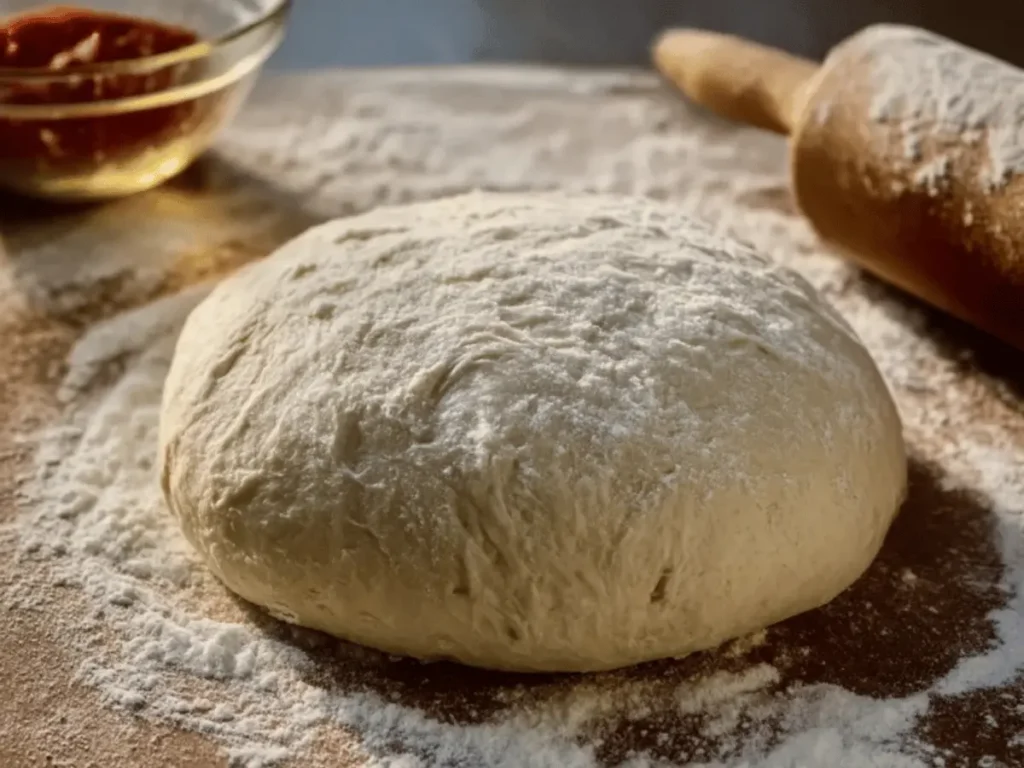
There’s a specific sound homemade pizza dough makes when you stretch it properly—this soft, almost whisper-quiet tear as the gluten relaxes and the dough goes from a tight ball to a thin, translucent circle. I didn’t hear that sound for about two years of failed attempts before I figured out what I was doing wrong. Turns out, I was overthinking everything.
I’d been using active dry yeast because that’s what my grandmother used, following these elaborate proofing rituals that involved testing water temperature with a thermometer and waiting for the yeast to foam like some kind of science experiment. Then one harried Wednesday evening, I grabbed instant yeast by mistake at the grocery store, didn’t realize it until I was already home, and just decided to wing it. Those pizzas were the best I’d ever made. Sometimes the shortcut is actually the better route.
Why Instant Yeast Changes the Game
Instant yeast—sometimes labeled as “rapid rise” or “bread machine yeast”—is essentially yeast that’s been dried more finely and doesn’t need to be activated in water first. You can mix it straight into your flour, which eliminates an entire step and removes the most common point of failure in pizza dough: killing your yeast with water that’s too hot.
But here’s what really matters: instant yeast is more reliable. It’s more tolerant of temperature variations, it works faster, and in my experience, it produces a more consistent rise. I’ve made this dough in cold kitchens in January and sweltering ones in August, and it performs every single time.
The texture it creates is what won me over completely. You get this light, airy crust with just enough chew—not the dense, breadstick-like disappointment I used to produce. And the flavor? With a proper rest time, it develops that slightly tangy, complex taste that makes you understand why people get obsessed with perfecting pizza dough.
The Base Recipe I Use Every Week
You’ll need:
- 3 1/2 cups bread flour (all-purpose works, but bread flour gives better chew)
- 2 teaspoons instant yeast
- 2 teaspoons sugar
- 2 teaspoons salt
- 2 tablespoons olive oil, plus more for the bowl
- 1 1/3 cups warm water (just warm to the touch, nothing precise)
Mix the flour, instant yeast, sugar, and salt in a large bowl. I use a whisk for this part because it distributes everything evenly and you don’t end up with pockets of salt or yeast. Make a well in the center, add the olive oil and water, and stir with a wooden spoon until it comes together into a shaggy mass.
Here’s where most recipes tell you to knead for 10 minutes, and that’s fine, but I’ve gotten lazy in my old age. I do about 5 minutes of kneading—just until the dough is smooth and springs back when you poke it—then I let time do the rest of the work. The dough continues developing gluten while it rises, so obsessive kneading isn’t as critical as I used to think.
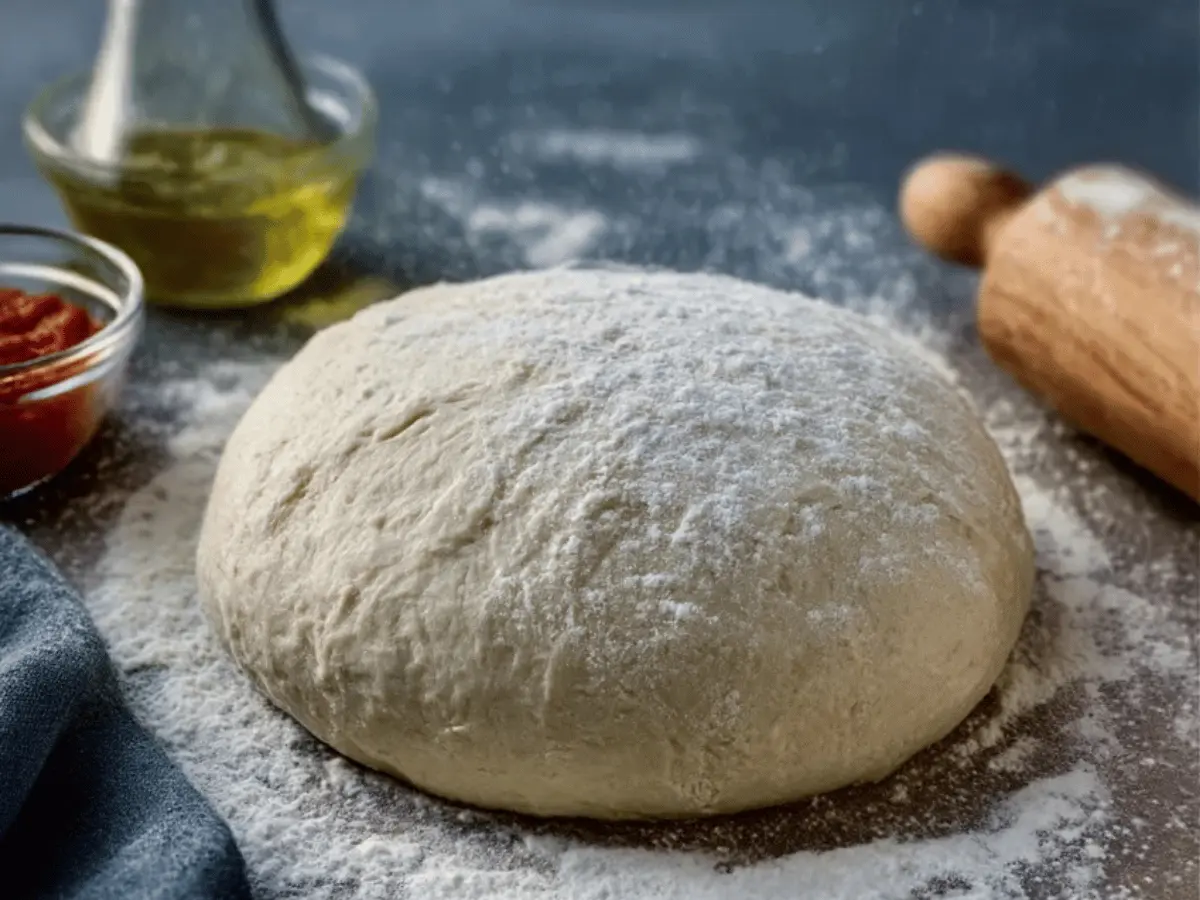
Coat a clean bowl with olive oil, place your dough ball in it, turn it once to coat, and cover with a damp kitchen towel or plastic wrap. Let it rise for 1 to 1.5 hours, or until doubled in size. In a warm kitchen, this happens closer to an hour. In winter, sometimes it takes the full 90 minutes. You’ll know it’s ready when you press a finger into it and the indentation stays.
Punch down the dough—literally just press your fist into it to deflate—and divide it into two equal pieces. Each piece makes one 12-14 inch pizza, depending on how thin you stretch it. At this point, you can either use it immediately or refrigerate it for up to 3 days. Actually, refrigerating it overnight is what I do now almost exclusively. That cold fermentation develops flavor that same-day dough just can’t match.
The Technique That Finally Clicked
For years I tried using a rolling pin on pizza dough. This was my fundamental mistake. Rolling pins compress the dough and press out all those beautiful air bubbles you just spent over an hour developing. It also activates the gluten, making the dough fight back and shrink.
Instead, let the dough come to room temperature (about 30 minutes out of the fridge), then place it on a lightly floured surface. Press it flat with your fingertips, working from the center outward and leaving about an inch around the edge untouched—that becomes your crust. Then pick up the dough, make gentle fists with both hands, and let the dough drape over your knuckles. Gravity does most of the stretching work. Rotate the dough, letting it stretch naturally, and before you know it you’ve got a thin, even circle with a puffy edge.
I learned this from watching a pizza maker in Brooklyn back in 2016, and he told me something I think about every time I make pizza: “The dough wants to stretch. You’re just helping it remember.” And that’s exactly what it feels like when you do it right—cooperation, not force.
If the dough keeps shrinking back, just let it rest for 5 minutes. That’s the gluten being tight. A few minutes of rest and it becomes pliable again.
My Current Pizza Night Routine
These days I make the dough on Friday afternoon, let it do its first rise, divide it, and stick both balls in the fridge in separate oiled containers. Saturday evening, I pull them out while the oven preheats to 500°F (or as high as mine goes—some ovens max out at 550°F).
I place a pizza stone or an overturned baking sheet on the lowest oven rack and let it heat for a solid 30 minutes. That thermal mass is what gives you the crispy bottom crust that makes homemade pizza actually taste like pizzeria pizza.
Stretch the dough, build your pizza on a piece of parchment paper (this makes transfer so much easier), then slide the whole thing—parchment and all—onto your preheated stone. Bake for 8-12 minutes, depending on your oven and how loaded the pizza is. You want the crust golden and the cheese bubbling with those little brown spots.
I went through a phase last year where I was making pizza every single weekend, testing different hydration levels and flour types. What I settled on is this recipe because it’s remarkably forgiving and consistently good. A fancier, wetter dough might be marginally better in the hands of an expert, but this one works for regular people in regular kitchens without special equipment.
What Works and What Doesn’t
I’ve tried adding herbs to the dough (nice, but unnecessary), using honey instead of sugar (can’t tell the difference), replacing some flour with whole wheat (fine, but makes it denser), and doing a no-knead overnight version (good, but not actually easier when you factor in planning time).
The one variation I do love is brushing the crust edge with garlic butter halfway through baking. Not revolutionary, but it makes people unreasonably happy. I also started keeping a jar of the dry ingredients pre-mixed—flour, yeast, sugar, salt—so making pizza becomes even more spontaneous. Just add oil and water.
The biggest lesson this dough taught me is that bread baking doesn’t have to be intimidating or precious. Instant yeast removes the anxiety, and a simple recipe removes the excuses. Now pizza night happens whenever I want it to, which turns out to be pretty often. That sound of dough stretching properly? I hear it at least twice a month now, and it still makes me unreasonably happy.