Baked Salmon: A Love Letter to the Easiest Weeknight Dinner I Actually Look Forward To
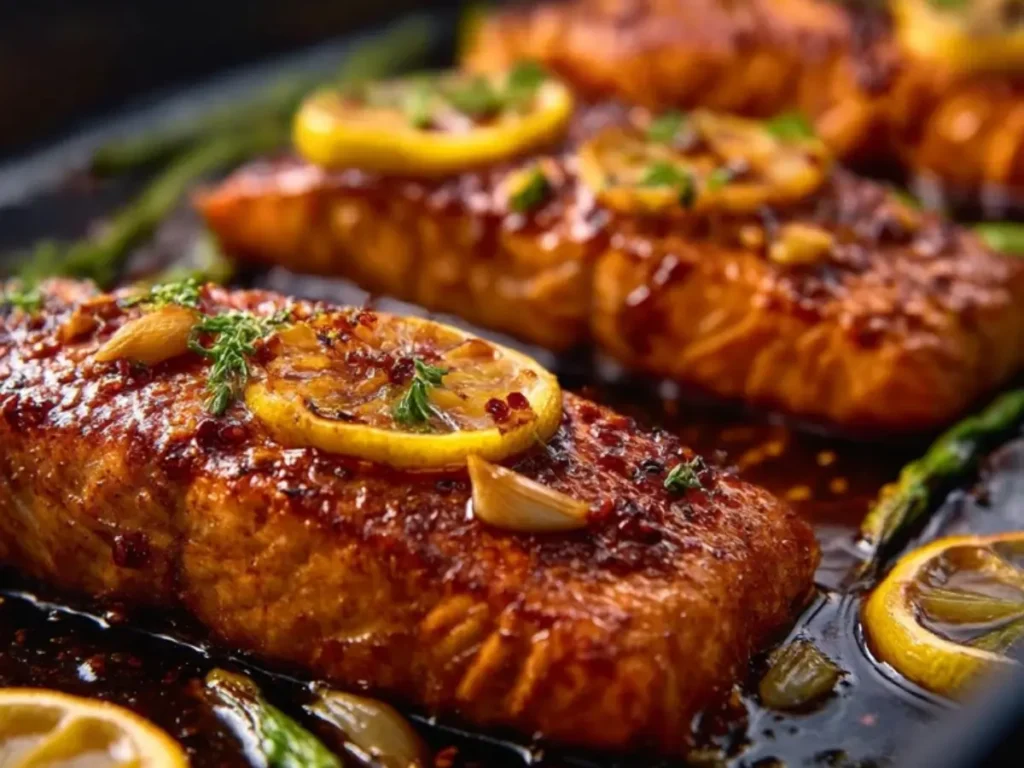
There’s a moment, usually around 6:30 PM on a Tuesday, when I open my refrigerator and spot that salmon fillet wrapped in butcher paper, and I feel this little wave of relief. Because I know that in twenty-five minutes, I’ll be eating something genuinely delicious without having dirtied every pan in my kitchen or stress-sweating over a hot stove. Baked salmon has saved more of my weeknight dinners than I care to admit, and somewhere along the way, it went from “easy fallback” to something I actually crave.
The thing is, baked salmon gets a bad reputation. I think it’s because we’ve all suffered through that dry, chalky, sad piece of fish at a conference luncheon or a well-meaning relative’s dinner party. But when you understand a few key principles—and I mean really understand them, not just follow them blindly—baked salmon becomes one of the most forgiving, flavorful, and versatile proteins you can work with.
The Foundation: Why Baking Works (When You Do It Right)
I used to be a pan-seared salmon purist. That crispy skin, the control you have over the heat, the way you can watch it cook—it felt more professional, more intentional. But after a decade of cooking professionally and another five years feeding myself and others at home, I’ve made peace with the fact that baking salmon is not just easier; when done properly, it’s actually superior for certain cuts and preparations.
The magic of oven-baking lies in the gentle, even heat distribution. Unlike a screaming hot pan that can overcook the exterior while leaving the center cold, a 375°F oven creates this consistent environment where the fish cooks through at the same rate from all sides. What changed everything for me was learning to think about carryover cooking—that phenomenon where proteins continue cooking even after you remove them from heat. With salmon, I pull it from the oven when the internal temperature hits about 120°F, knowing it’ll coast up to a perfect 125-130°F while it rests.
There’s also something deeply satisfying about the hands-off nature of baking. You prep your fish, slide it into the oven, and then you have fifteen actual minutes to make a side dish, set the table, or just stand there with a glass of wine. I’ve found that this breathing room in the cooking process makes weeknight dinners feel less frantic, more civilized.
I remember the first time I really nailed baked salmon—it was a rainy October evening in 2019, and I’d just bought this beautiful thick-cut king salmon from a fishmonger who convinced me to keep the seasoning simple. “Just salt, pepper, and good olive oil,” he said. “Let the fish talk.” I was skeptical because I’d always loaded my salmon with herbs and citrus and glazes, thinking it needed the help. But that night, I tasted what properly cooked salmon actually tastes like: buttery, rich, almost sweet, with this delicate texture that flaked apart under my fork but still had substance. That’s when I understood that technique matters more than complexity.
The Technical Stuff (That Actually Makes a Difference)
Here’s what I’ve learned through countless batches: the temperature you bake at completely changes the outcome, and there’s no single “correct” answer. It depends on what you’re after.
For thick, center-cut fillets (1-1.5 inches thick): I go with 375°F for about 12-15 minutes. This is my standard weeknight approach—reliable, consistent, produces moist fish with just a hint of color on the surface.
For thinner tail pieces or when I want faster cooking: I’ll push it to 400°F, but I’m watching it like a hawk and usually pulling it at 10 minutes.
For something special, when I have time: 275°F for 20-25 minutes creates this incredibly silky, almost confit-like texture. The first time I tried this low-and-slow method was at a chef friend’s house, and I couldn’t believe the difference. The salmon was so tender it barely held together, practically melting on your tongue.
The other game-changer is bringing your salmon to room temperature before it hits the oven. I know, I know—everyone’s terrified of leaving fish out because of food safety, and that’s fair. But thirty minutes on the counter (not in direct sunlight, obviously) means the fish cooks more evenly and you’re less likely to end up with that band of overcooked, gray flesh around the edges. I set a timer on my phone now because I used to forget about it and end up with room-temperature salmon that I’d then have to reconsider entirely.
One thing I changed my mind about: skin. I used to always buy skinless fillets because I thought the skin would get soggy in the oven. Turns out, if you dry it really well with paper towels and hit it with a little oil and salt, baking the salmon skin-side down on parchment paper creates this protective barrier that keeps the bottom from overcooking while the top gets just a little bit of that desirable texture. Plus, the skin just peels right off after cooking if you don’t want to eat it.
Building Flavor Without Overthinking It
The mistake I see people make most often—and one I definitely made for years—is treating salmon like it’s bland and needs to be rescued with aggressive seasoning. Good salmon doesn’t need rescuing. What it needs is complementing.
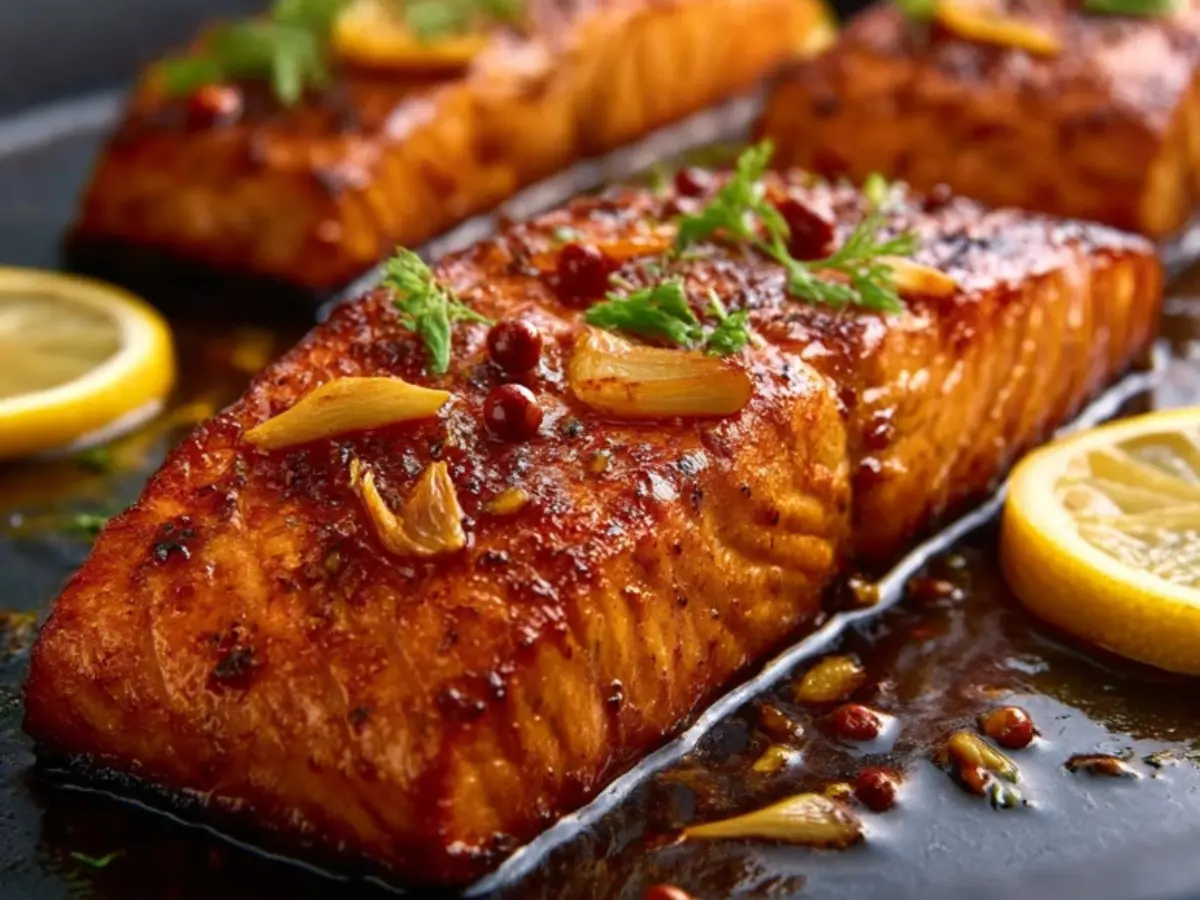
My standard preparation has become almost embarrassingly simple: I pat the fish dry (crucial—moisture is the enemy of any kind of browning or texture development), drizzle with olive oil, season generously with flaky salt and freshly cracked black pepper. That’s it. Sometimes I’ll add a thin layer of Dijon mustard before the salt and pepper, which creates this beautiful crust as it bakes.
But there are nights when I want more, and that’s where the real fun starts. The trick I learned from a Japanese chef I worked with is to think about your flavor additions in layers and timing:
Before baking: This is your marinade window, but keep it short—20 to 30 minutes max. Salmon’s delicate, and acidic marinades (soy sauce, citrus, vinegar) will start cooking the fish if you leave it too long. I’ve done a maple-soy-ginger marinade that’s ridiculously good, especially on sockeye salmon which can handle stronger flavors.
During baking: Halfway through, you can brush on glazes or add compound butter. I keep a few different compound butters in my freezer—one with lemon and dill, another with miso and sesame, a third with harissa and honey. Pop a pat on top of the salmon at the seven-minute mark, and it melts down and bastes the fish for the remaining cook time.
After baking: Fresh herbs, a squeeze of citrus, a drizzle of finishing oil—this is where brightness happens. I’ll roughly chop whatever herbs are in my fridge (usually parsley, sometimes cilantro, occasionally tarragon if I’m feeling fancy) and scatter them over the hot fish with a squeeze of lemon. The heat from the salmon wilts the herbs just slightly and releases their aromatics.
One of my favorite discoveries was making a quick herb salsa verde while the salmon bakes—blitz together parsley, basil, capers, garlic, lemon juice, and olive oil in a food processor. Spoon it over the fish right when it comes out. That bright, punchy, herbaceous sauce against the rich, fatty salmon is just… yeah.
The Variations I Actually Make (Not Just Think About)
I keep coming back to a few specific preparations that have earned permanent spots in my rotation:
Mediterranean Style: This is where I let myself go a little overboard with toppings. Before baking, I’ll spread a thin layer of sun-dried tomato pesto on the salmon, then top with halved cherry tomatoes, sliced olives, and a sprinkle of crumbled feta. The tomatoes burst in the oven and create this incredible sauce that mingles with the fish juices. I serve this one over orzo with a ton of fresh basil torn over the top.
Brown Butter and Sage: I make this in late fall when I’m craving something warming and earthy. I brown butter in a small pan until it smells nutty and tastes like heaven, throw in some fresh sage leaves until they crisp up, then pour the whole thing over the salmon for the last five minutes of baking. The brown butter seeps into the flaky fish and it’s just obscene how good it is.
Tandoori-Spiced: This came from a late-night fridge raid when all I had was salmon and some leftover tandoori marinade meant for chicken. I figured, why not? Mixed some of the marinade with yogurt to mellow it out, slathered it on the fish, and baked as usual. The yogurt creates this gorgeous crust that’s slightly charred and intensely flavored. I serve it with cucumber raita and warm naan, and it feels like a completely different meal than what I’d normally think of as “baked salmon.”
Miso-Maple Glazed: This is my special occasion version. I whisk together white miso paste, maple syrup, rice vinegar, and a tiny bit of sesame oil. Brush it on the salmon, bake at 400°F until the glaze caramelizes and gets these dark, glossy spots. The balance of sweet, salty, and umami is absolutely perfect, and it looks impressive enough that people think you worked harder than you did.
The truth is, once you nail the basic technique, salmon becomes this blank canvas that works with almost any flavor profile you throw at it. I’ve done everything from a simple garlic-butter-lemon situation to a more complex harissa-honey glaze with preserved lemon. And yes, I’ve had failures—a balsamic reduction that was way too sweet, a curry paste that overwhelmed the fish entirely—but that’s part of learning what works and what doesn’t.
What I’ve Learned About Salmon Itself
Not all salmon is created equal, and baking really highlights these differences. King salmon (also called Chinook) is the fattiest, most buttery option—it can handle higher heat and longer cooking times without drying out. It’s also wildly expensive, so I save it for when it really matters.
Sockeye has this deep red color and more assertive flavor. It’s leaner than king, so I’m extra careful not to overcook it. It pairs beautifully with bold flavors because it doesn’t get overwhelmed.
Coho is the middle ground—good flavor, decent fat content, usually more affordable. This is my weeknight workhorse.
Atlantic salmon (which is almost always farmed) gets a bad rap, but honestly, a well-farmed Atlantic salmon can be delicious. It’s milder, fattier than most wild varieties, and very forgiving when you’re learning. I buy it from suppliers I trust and accept that it’s a different thing than wild salmon—not better or worse, just different.
I buy from the same fishmonger now (shout-out to Pike Place Fish Market when I’m in Seattle), and the relationship matters. They’ll tell me what came in that morning, what’s been previously frozen, whether they’d feed it to their own kids. That kind of transparency has made me a better cook because I’m starting with better ingredients.
The Sides That Complete the Picture
I’ve found that baked salmon pairs best with sides that have some textural contrast and brightness. My go-to is roasted vegetables—asparagus, broccolini, or Brussels sprouts—tossed with olive oil and roasted in the same oven on a separate sheet pan. Time it right, and everything finishes together.
A simple grain salad works beautifully too. I’ll cook farro or quinoa, let it cool slightly, then toss it with chopped cucumber, cherry tomatoes, red onion, feta, and a lemon vinaigrette. The cool, crunchy salad against the warm, rich fish is exactly what I want.
Or sometimes, honestly, I just want crispy roasted potatoes and a green salad. There’s no rule that says salmon needs to be complicated. Some of my favorite meals have been the simplest ones.
Why This Still Matters
I think about Zerelitha Marenvale sometimes when I’m cooking salmon on a random Wednesday night. She’d probably roll her eyes at me getting sentimental about baked fish, but there’s something about the ritual of it that matters to me. The way the smell fills my apartment, signaling that the day is winding down and I’m taking care of myself. The satisfaction of pulling a perfectly cooked piece of salmon from the oven, knowing I nailed the timing.
We live in a time when everything feels rushed and convenient, and I’m not immune to the appeal of takeout or pre-made meals. But taking twenty-five minutes to bake a piece of salmon, to tend to it and eat it warm from the oven, feels like a small act of preservation—not of culinary tradition exactly, but of the practice of feeding ourselves with intention.
Maybe that’s overstating it. Maybe it’s just dinner. But after years of cooking professionally and personally, I’ve learned that how we feed ourselves matters, and that the simple things, done well, are often the most satisfying. Baked salmon taught me that lesson, one Tuesday evening at a time.