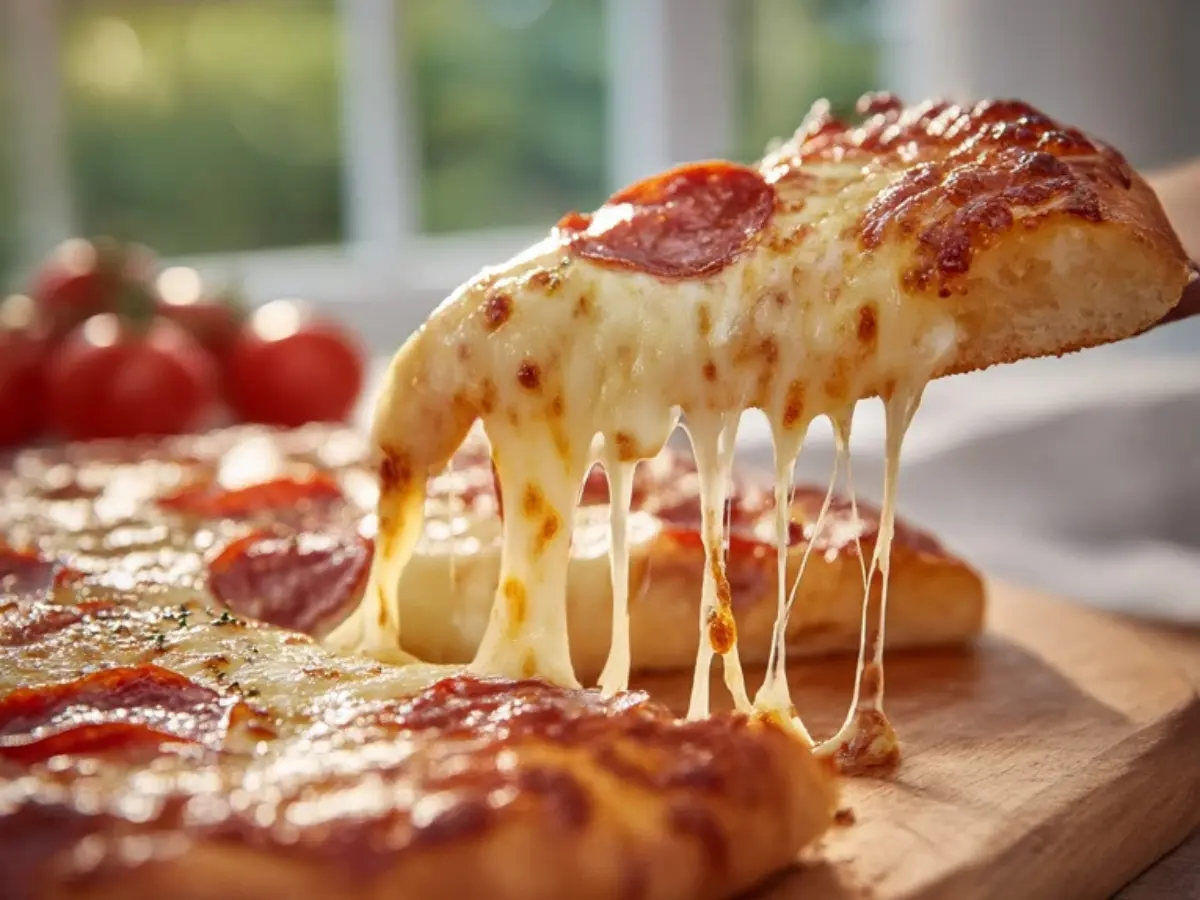
The Unlikely Holiday That Made Me Appreciate Pizza All Over Again
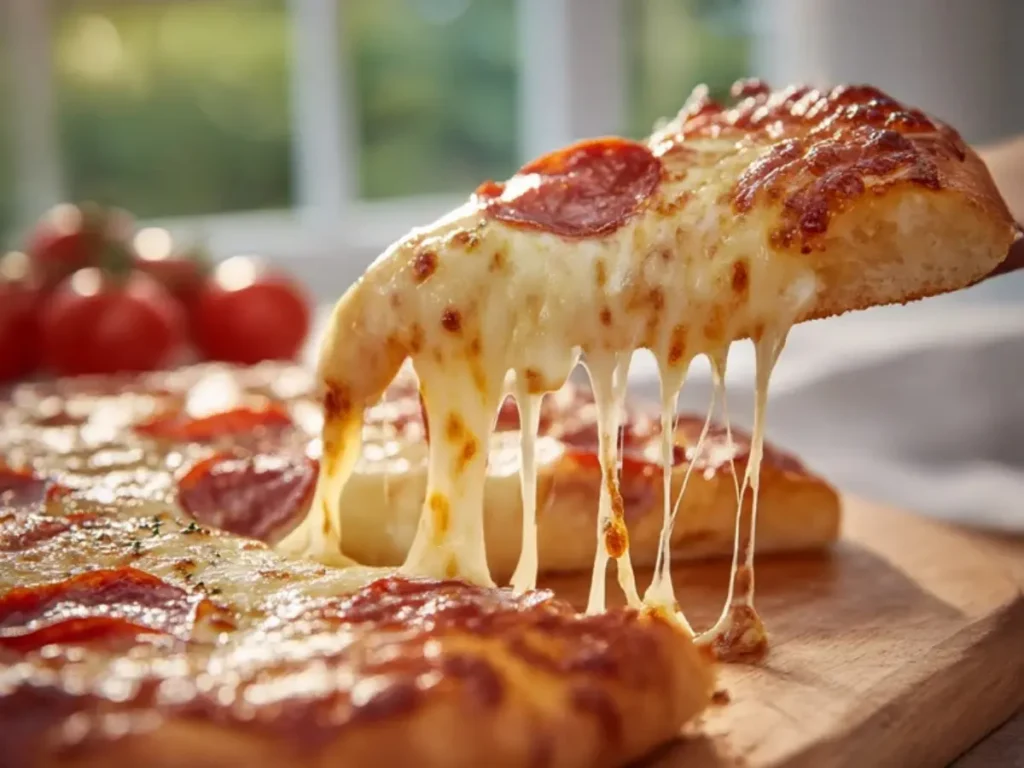
International Cheese Pizza Day sneaks up every February 9th, and I’ll admit – the first time I encountered it, I rolled my eyes. Another food holiday manufactured by marketing departments, right? But that was before I spent an afternoon in Naples with a pizzaiolo named Giuseppe who’d been making the same cheese pizza for forty-three years. That experience completely changed how I understood what seems like the simplest pizza you can order.
There’s something deceptively humble about a cheese pizza. It’s what we order for picky kids, what we fall back on when we can’t agree on toppings. But stripping pizza down to just crust, sauce, and cheese is actually where you see everything – every flaw in technique, every shortcut in ingredients. There’s nowhere to hide behind pepperoni or a pile of vegetables.
The Accidental Genius of Simplicity
The cheese pizza as we know it – or more precisely, the Pizza Margherita – has one of those food origin stories that might be legend but is too good not to repeat. In 1889, a Neapolitan pizza maker named Raffaele Esposito created a pizza with tomatoes, mozzarella, and basil for Queen Margherita of Italy, matching the colors of the Italian flag. Whether that’s completely true or partly romanticized hardly matters now. What matters is that this combination revealed something essential about pizza: when each element is perfect, you don’t need anything else.
I’ve spent time in pizzerias from New Haven to Rome, and the approach to cheese pizza tells you everything about a place’s philosophy. In Naples, they obsess over the buffalo mozzarella – its water content, how it’s torn rather than sliced, when it’s added during the baking process so it doesn’t turn rubbery. The crust is soft and slightly charred, bubbling up in those leopard-spotted edges that only a 900-degree wood-fired oven can create. The tomatoes come from volcanic soil near Mount Vesuvius, giving them a sweetness and acidity that balances the rich cheese.
New York-style cheese pizza is a completely different philosophy. Here, the cheese – usually a low-moisture mozzarella – gets layered more generously, creating that characteristic oil that pools in little orange puddles. The crust is thinner, foldable, designed to be eaten while walking. A proper New York slice has structural integrity you can test by holding it at the crust and watching that perfect droop – not too limp, not too rigid.
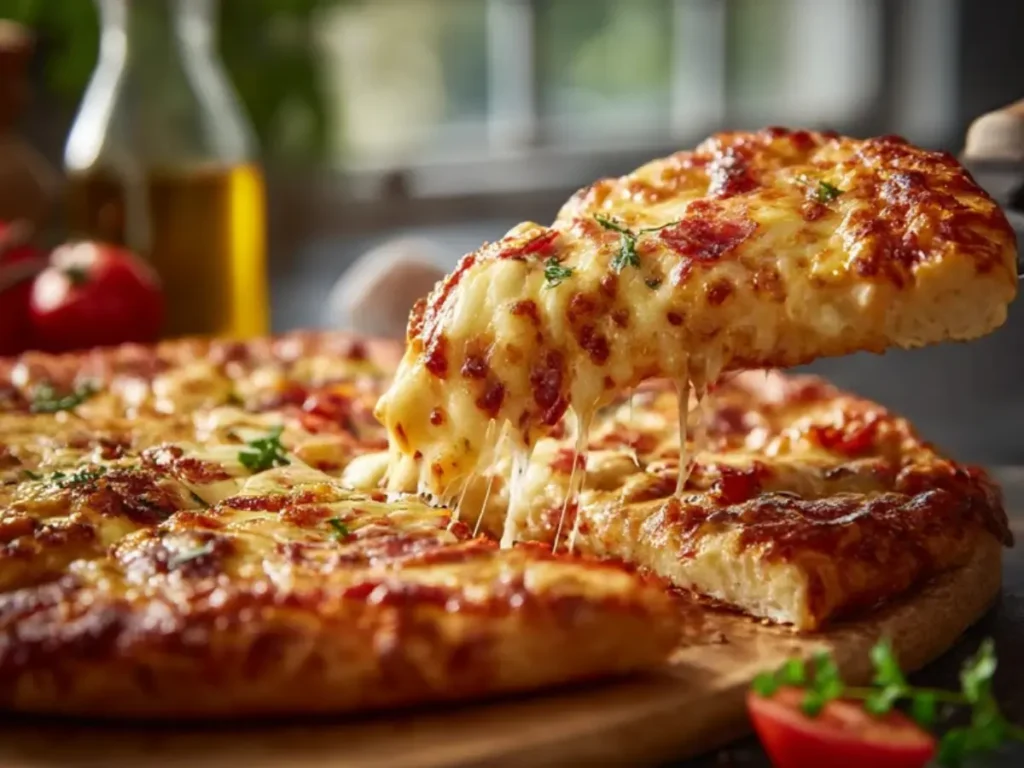
What I Learned From Failing at Cheese Pizza
Back in 2016, I decided to master homemade cheese pizza. How hard could it be with just three main components? Turns out, incredibly hard. My first attempts produced what I can only describe as hot disappointment – dough that was simultaneously too thick and too dense, sauce that turned bitter in the oven, cheese that separated into an oil slick.
The problem was assuming simplicity meant easy. I was using pre-shredded mozzarella (coated with cellulose to prevent clumping, which also prevents proper melting), sauce straight from a jar without tasting or adjusting it, and dough I hadn’t let ferment long enough to develop flavor. Each component was technically correct but uninspired.
What changed everything was understanding hydration ratios in dough, learning to make a quick cooked sauce that concentrates flavors rather than letting them steam away, and hand-pulling low-moisture mozzarella into uneven pieces so some spots get crispy while others stay creamy. These aren’t revolutionary techniques – they’re what any decent pizzeria knows instinctively. But discovering them myself made me appreciate why a truly excellent cheese pizza costs what it does.
The temperature revelation came later. Home ovens max out around 500-550°F, but professional pizza ovens run 700-900°F. That difference isn’t just about speed – it’s about creating that specific texture where the crust sets almost instantly while the interior stays tender and the cheese barely has time to break before the pizza’s done. I eventually bought a pizza steel and learned to preheat it for a full hour, getting it scorching hot. Not quite Naples, but respectable.
Why Cheese Pizza Actually Matters
There’s a reason pizzerias judge each other by their plain cheese slice. It’s the great equalizer, the truth-teller. I’ve eaten at trendy spots where the burrata-and-prosciutto pizza was Instagram-gorgeous but the basic cheese was forgettable – a clear sign they were hiding behind expensive toppings rather than mastering fundamentals.
The best cheese pizza I’ve ever had wasn’t in Italy, actually. It was at a third-generation family place in New Haven, Connecticut, where they’ve been using the same sourdough starter since 1938. The owner – a guy named Tony who looked like he’d never missed a day in the kitchen – explained that their cheese pizza (they call it “plain pie”) uses three different cheeses blended in proportions that shift slightly with the seasons as moisture content changes. He could tell by touching the cheese whether it needed adjustment that day.
That kind of obsessive attention to something “simple” is what International Cheese Pizza Day actually celebrates, whether it knows it or not. It’s not about the holiday itself – honestly, the origins of these food days are usually murky and commercial. But it creates a moment to appreciate that the pizza you thought was boring or basic is actually a masterclass in balance, timing, and ingredient quality.
I’ve noticed that chefs, when they eat pizza together, almost always order cheese. Not because they’re unadventurous, but because that’s how you evaluate technique. Can they handle high hydration dough? Did they salt the sauce properly? Is the cheese distribution even? Does the crust have enough structure and flavor to be interesting on its own? A cheese pizza answers all these questions immediately.
The Thing Nobody Tells You
Here’s what surprised me most about focusing on cheese pizza: it made me more creative, not less. Once I understood the fundamentals – how dough behaves, how sauce seasons, how cheese melts – I could experiment with confidence. I started making white pizzas with three kinds of cheese and garlic. I tried different flour types and fermentation times. I even made a cheese pizza with brown butter in the dough, which sounds weird but was incredible.
But I keep coming back to the classic. There’s something almost meditative about making a simple cheese pizza well. No decisions about topping combinations, no debates about whether pineapple belongs anywhere near tomato sauce (it doesn’t, but that’s another article). Just you and the fundamentals, trying to get that crust perfectly crispy-chewy, that sauce bright and sweet-tart, that cheese melted into golden pools with crispy edges.
So when February 9th rolls around, I don’t celebrate because a calendar tells me to. I celebrate because cheese pizza – real, thoughtful, well-made cheese pizza – deserves recognition as something more than a default order. It’s where pizza began, and where it proves itself. Everything else is just showing off.