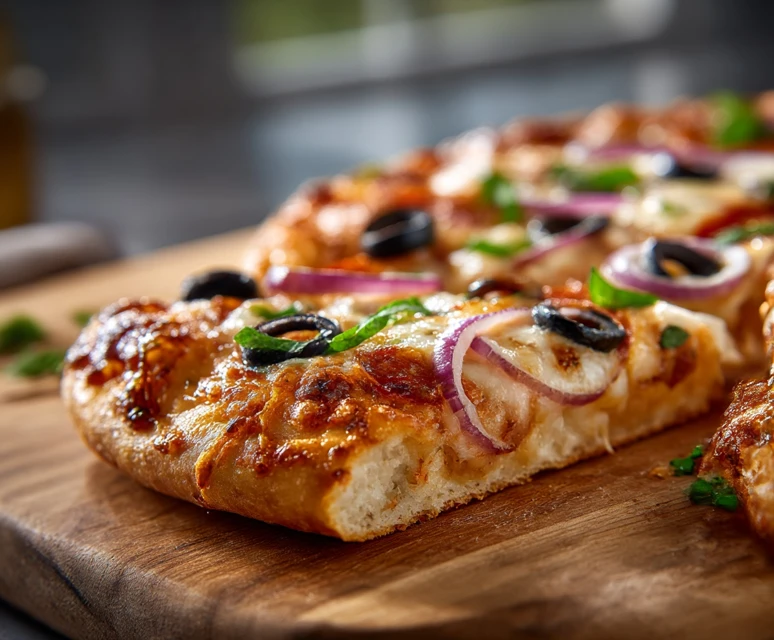
The 2-Hour Pizza Dough That Saved My Dinner Plans
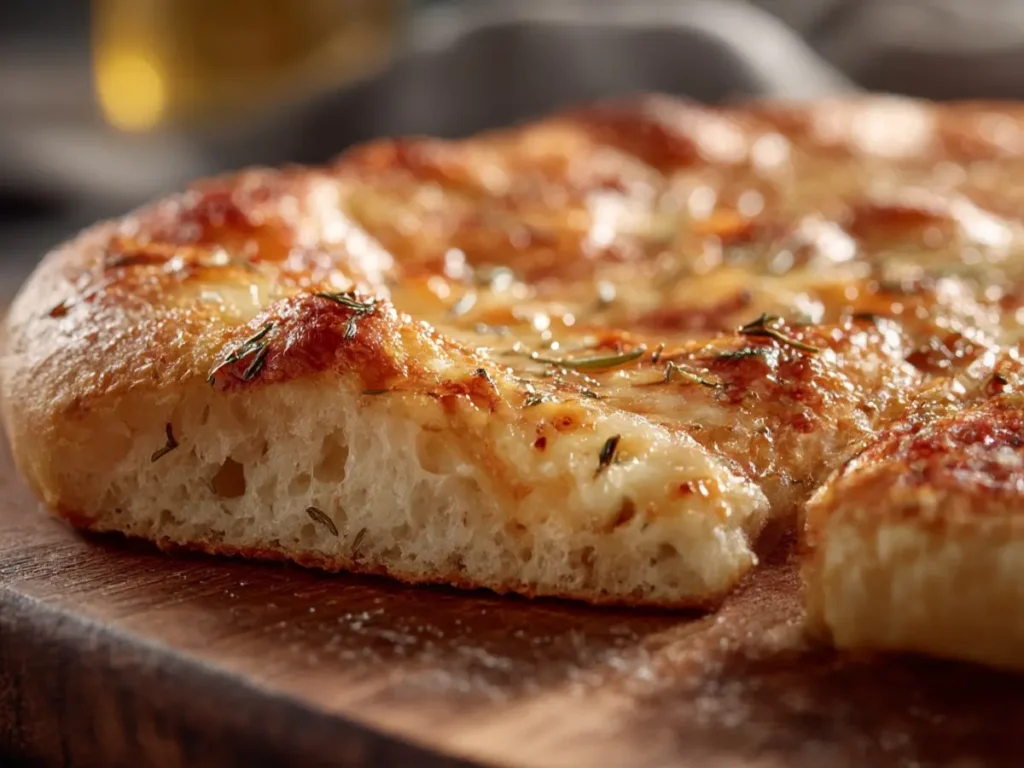
I understand you’re interested in quick pizza dough! Let me create a humanized food article for you. Since you haven’t provided a specific title and description, I’ll create one based on what seems most useful:
Working Title: “The 2-Hour Pizza Dough That Saved My Dinner Plans” Description: A practical guide to making quality pizza dough when you don’t have all day, including the techniques that actually make a difference and the shortcuts that don’t sacrifice flavor.
The 2-Hour Pizza Dough That Saved My Dinner Plans
There’s a particular kind of panic that sets in around 4 PM when you’ve promised homemade pizza for dinner and suddenly realize your dough is still… not made. I learned this the hard way about six years ago when my sister and her kids showed up expecting pizza night, and I had nothing but a bag of flour and misplaced confidence. That evening, out of desperation, I figured out that good pizza dough doesn’t actually require the overnight fermentation I’d been religiously following. Sometimes speed and quality can actually coexist.
The truth is, most traditional pizza dough recipes were designed for a different era – one where someone was home all day to tend to the dough, or where the local pizzeria had dough going constantly. But for those of us making pizza at home on a Tuesday night, waiting 24 hours isn’t always realistic. What I’ve discovered through years of weeknight pizza emergencies is that you can make genuinely good dough in about two hours, start to finish. Not quite Neapolitan-level, sure, but better than anything you’d get from the store.
Understanding What Makes Dough Work Fast
The science behind pizza dough is actually pretty straightforward: yeast eats sugar, produces carbon dioxide, and creates those beautiful air pockets we love. Normally this happens slowly, which builds complex flavors through fermentation. When you’re speeding things up, you’re basically asking the yeast to work overtime, and there are smart ways to do that without ending up with something that tastes like cardboard.
I spent a winter testing every “quick” pizza dough method I could find – from the no-knead versions to the Greek yogurt shortcuts that promise instant results. Here’s what I learned: warmth is your friend, but only to a point. Water temperature matters more than any recipe ever emphasizes. I keep a kitchen thermometer specifically for this, and I aim for water between 105-110°F. Any cooler and your dough takes forever; any hotter and you risk killing the yeast entirely. I found this out the hard way when I was in a huge rush and used water that was probably closer to 120°F. The dough just sat there like a lump, completely lifeless.
The other game-changer is using instant yeast (sometimes called rapid-rise or bread machine yeast) instead of active dry. With instant yeast, you can skip the proofing step entirely and mix it right into your flour. This alone saves you 10-15 minutes, and in the quick-dough game, that matters. I use about 2¼ teaspoons for a batch that makes two 12-inch pizzas – slightly more than a traditional recipe because we’re asking it to work faster.
The Actual Recipe That Works
For two pizzas, I combine 3 cups of bread flour (all-purpose works too, but bread flour gives you better chew), that 2¼ teaspoons of instant yeast, 1 tablespoon of sugar, and 1½ teaspoons of salt in a large bowl. The sugar feeds the yeast and speeds fermentation. Some purists will tell you sugar doesn’t belong in pizza dough, and normally I’d agree, but when you’re working against the clock, it makes a genuine difference.
I make a well in the center and add 1 cup of warm water (again, 105-110°F) and 2 tablespoons of olive oil. The oil isn’t traditional for Neapolitan pizza, but it does two things I care about in quick dough: it makes the dough more extensible (easier to stretch), and it adds a bit of flavor richness that you’d normally get from slow fermentation.
The kneading part is where people often go wrong. You need to develop the gluten, but you don’t need to knead for 20 minutes like some recipes suggest. About 8-10 minutes by hand, or 5-6 in a stand mixer with the dough hook, gets you there. You’re looking for dough that’s smooth, elastic, and springs back when you poke it. It should be slightly tacky but not sticky – if it’s sticking to your hands, work in a tiny bit more flour, a tablespoon at a time.
Here’s the part that took me forever to figure out: where you let the dough rise matters almost as much as the recipe itself. I put mine in a bowl, cover it with plastic wrap, and set it either in a turned-off oven with just the light on, or on top of my refrigerator if I’ve been running the oven. You want a consistently warm spot – around 80-85°F is ideal. In that environment, the dough doubles in about 45 minutes to an hour. The first few times I made quick dough, I left it on the counter in my drafty kitchen in February and wondered why it took two and a half hours.
What Makes It Actually Good
The thing that separates acceptable quick pizza dough from genuinely good quick pizza dough is a technique I picked up from a pizza maker in Providence back in 2019. After the first rise, instead of immediately shaping the dough, punch it down and let it rest for another 10-15 minutes. This seems counterintuitive when you’re in a hurry, but it relaxes the gluten and makes the dough so much easier to stretch. Without this rest, you end up fighting with dough that keeps shrinking back, and you’ll be tempted to use a rolling pin, which presses out all those beautiful air bubbles you just created.
I also learned to stop rolling my dough entirely. Press it out with your fingertips from the center outward, leaving the edge slightly thicker. Let gravity help – hold the dough up and let it stretch naturally, rotating as you go. It takes practice, but the texture difference is remarkable. You get that irregular, artisanal look with varied crust thickness that actually tastes better because the thin spots get crispy while the thicker spots stay chewy.
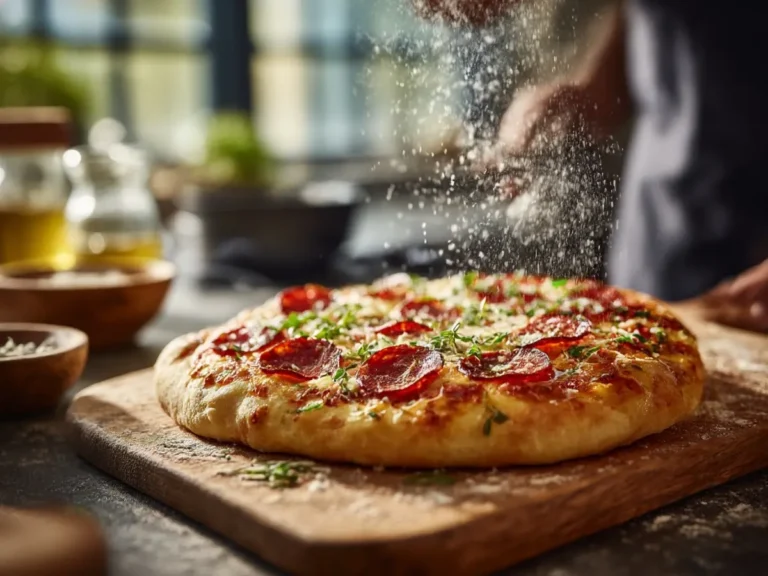
The one place I don’t compromise, even in a rush, is letting the shaped dough rest for 5 minutes before adding toppings. This prevents shrinkage in the oven. I stretch my dough on parchment paper dusted with cornmeal (easier than trying to transfer it on a peel), and those few minutes make the difference between a pizza that fits your pan and one that shrunk to an odd oval shape.
Why This Method Actually Works for Real Life
What I appreciate most about this approach is its forgiveness. Traditional slow-fermented dough requires planning, and if your timing is off by a few hours, you’ve got overproofed dough that tastes boozy and collapses in the oven. Quick dough has a narrower window of perfection, sure, but it also means you can decide to make pizza on a whim. I keep instant yeast in my freezer and bread flour in my pantry specifically for these moments.
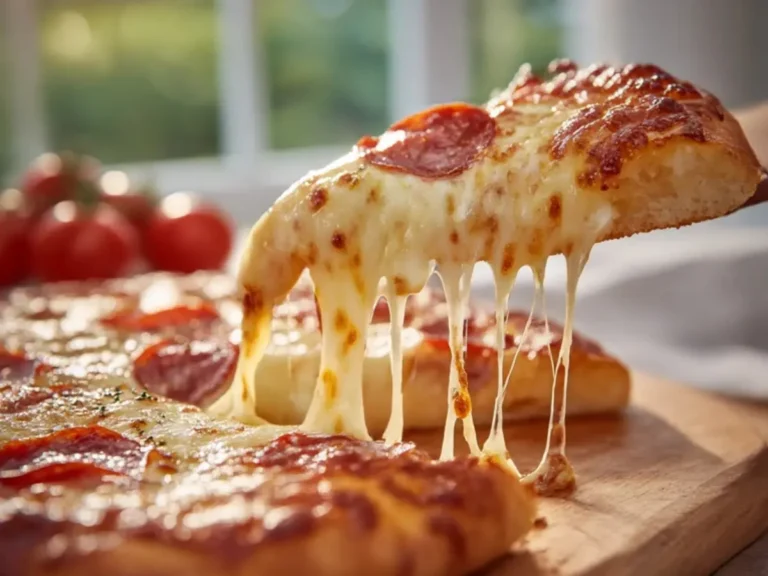
The flavor isn’t identical to 24-hour dough – you miss some of that subtle tanginess from long fermentation – but I’ve found that a good quick dough provides an excellent canvas for toppings. And honestly? When I’m making pizza with my nephews on a Tuesday night, what matters is that we’re making something together that tastes homemade and comes out of the oven hot and stretchy and exactly what we wanted.
I’ve made this dough probably 200 times now, and I’ve stopped apologizing for it not being “authentic.” It’s authentic to my life – to the reality that sometimes you want homemade pizza and you want it tonight. That first panicked attempt six years ago taught me that perfect is the enemy of done, and that some of the best meals come from working with constraints rather than against them. The dough I made that night wasn’t the best pizza dough I’ve ever created, but it was ready when we needed it, and that made it exactly right.